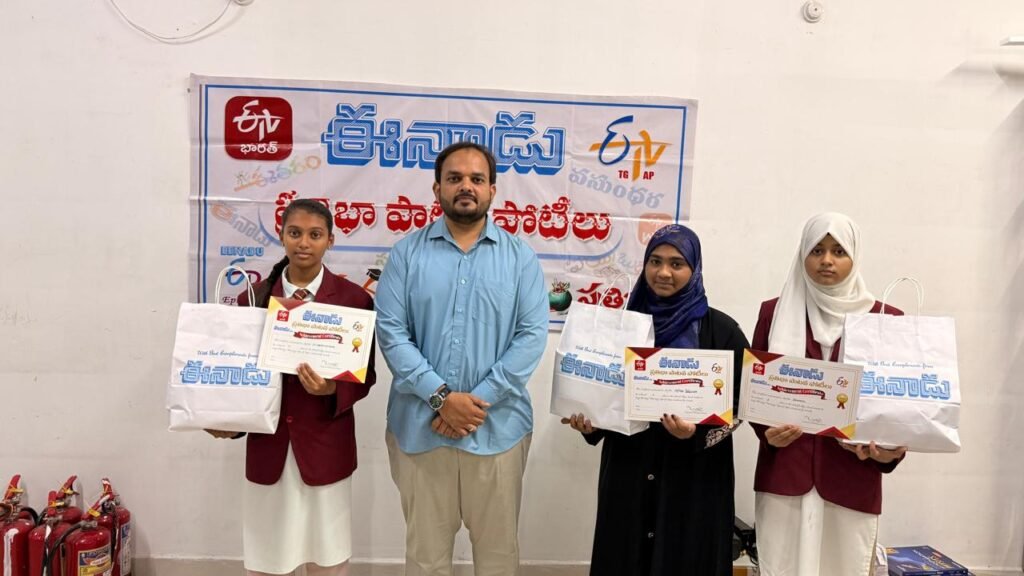
Three Grade X students from LAKSH International School, Kisannagar have won awards at the Eenadu Pratibha Patava Potilu painting competition, and the topic they were given could not have been more important: rainwater conservation. 🏆 Syeda Samreen, Ashritha Reddy and Afreen Tabassum each turned a blank sheet of paper into an argument about water — where it comes from, where it goes, and what we lose every time a monsoon shower runs off a roof and into a drain.
We are proud of them. But we are prouder of what the topic did inside our classrooms, because a painting competition on rainwater conservation is never really about painting. It is about a child understanding, perhaps for the first time, that the rain falling on their own terrace is a resource.
Table of Contents
LAKSH Students Win at the Eenadu Pratibha Painting Competition
Eenadu, Telangana’s largest-circulation Telugu daily, runs the Pratibha Patava Potilu — a long-running series of talent competitions for school and college students covering drawing, essay writing, elocution and quiz. Held under the Eenadu, ETV Bharat, ETV, Eenadu Pratibha, Chaduvu and Vasundhara banners, these contests reach students across every district of the Telugu states.
This edition’s drawing topic was rainwater conservation, and three of our students came away with Achievement Certificates and prizes:
| Winner | Grade | Campus | Award |
|---|---|---|---|
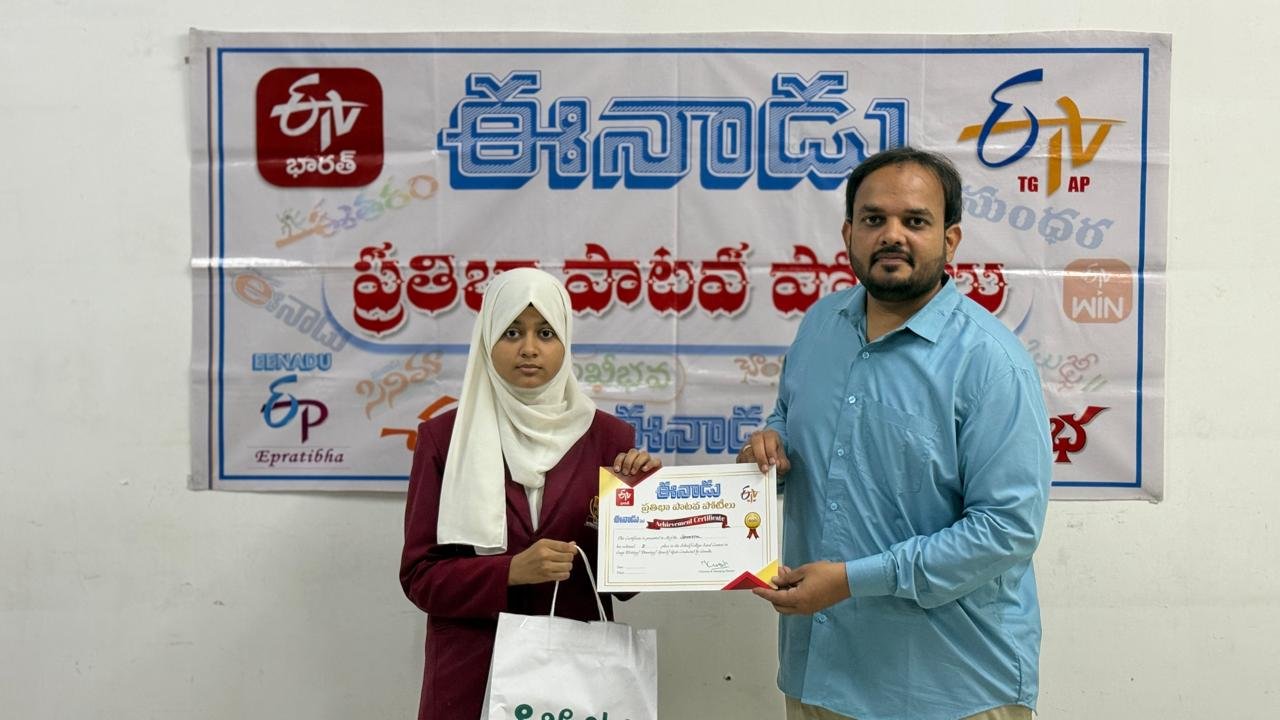
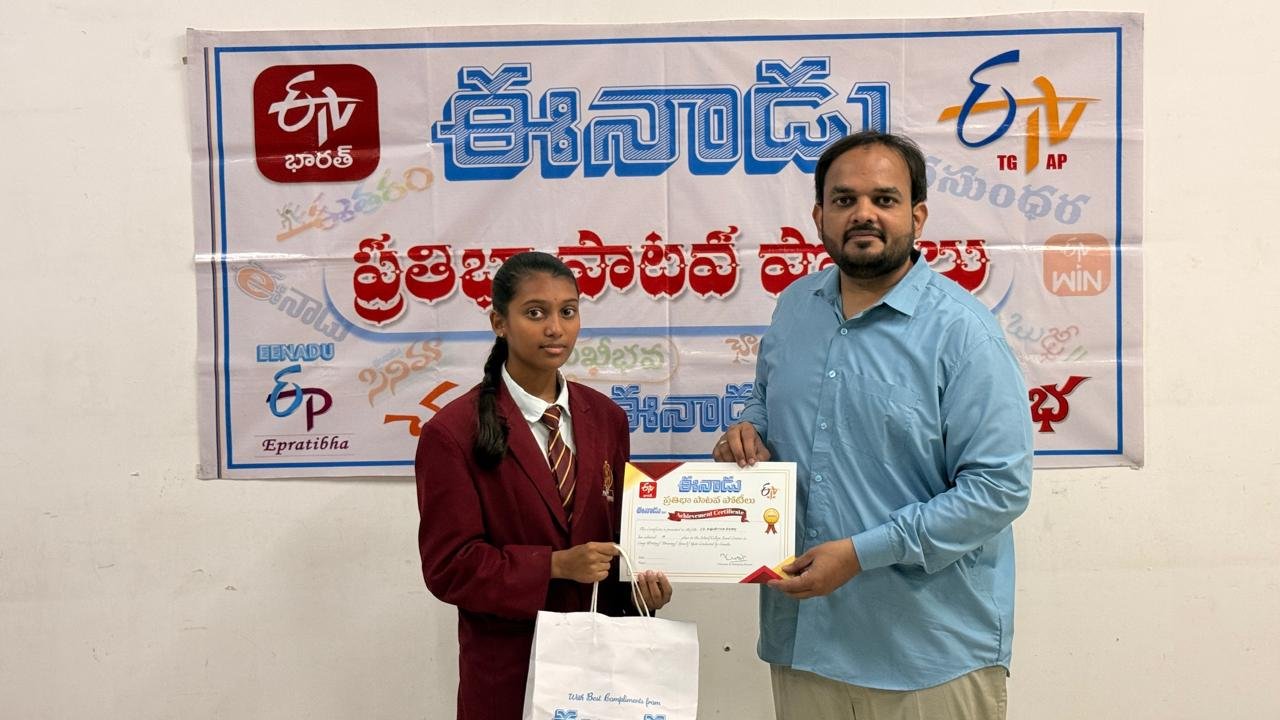
| Syeda Samreen | Grade X | Kisannagar | Achievement Certificate & prize |
| Ashritha Reddy | Grade X | Kisannagar | Achievement Certificate & prize |
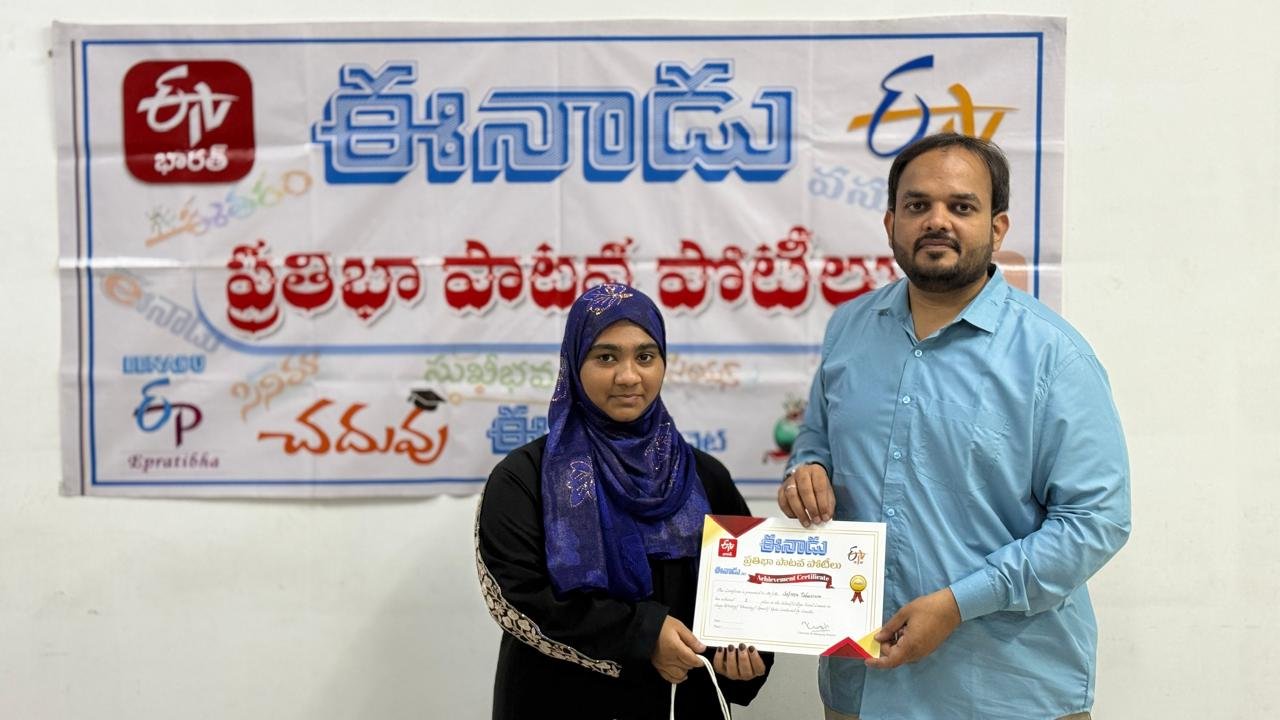
| Afreen Tabassum | Grade X | Kisannagar | Achievement Certificate & prize |
Three winners from a single Grade X batch, in a district-level contest, is not a coincidence. It is what happens when children are taught to look at a subject before they draw it. 🎨
Why Rainwater Conservation Was the Perfect Topic
Ask most people what rainwater conservation means and they will say “saving water”. That is true, but it is not the whole picture, and our students had to understand the difference before they could draw it.
Rainwater conservation is the practice of capturing rain where it falls — on roofs, on open ground, in tanks, in trenches and in recharge pits — and either storing it for use or letting it soak down to refill the groundwater beneath us. The alternative is what most of our towns do by default: let it run across concrete, into storm drains, and away.
India is home to roughly 18% of the world’s people but has access to only about 4% of the world’s freshwater resources. That single ratio is the reason rainwater conservation is a national priority and not a school project theme. The Government of India’s Jal Shakti Abhiyan campaigns under the slogan “Catch the Rain — Where it Falls, When it Falls”, and the Central Ground Water Board publishes the technical guidelines that make it possible.
For a child in Karimnagar, this is not an abstract national issue. It is the borewell at home that runs slower in April than it did in January.
Rainwater Conservation in Karimnagar: The Local Picture
Karimnagar district normally receives roughly 900 to 1,000 mm of rain a year, and the great majority of it arrives in a concentrated burst between June and September during the south-west monsoon. For three or four months the sky gives us more water than we can use. For the remaining eight, we draw down what is underground.
That pattern is exactly why rainwater conservation matters more here, not less. The problem in our region has never been a shortage of rainfall. The problem is that the rainfall arrives all at once, and we have built our streets, roofs and compounds to send it away as quickly as possible.
Telangana has made this a policy priority — Mission Kakatiya restored thousands of minor irrigation tanks across the state, including in Karimnagar district, precisely because those tanks were the traditional rainwater conservation system that our ancestors built and that we allowed to silt up.
When our students drew this topic, their teachers walked them to a window and asked a simple question: where does the rain that falls on this building go?
Rainwater Conservation Explained, Class by Class
One of the things we do differently at LAKSH is to teach a topic at the right depth for the right age, rather than handing every child the same paragraph. Here is how rainwater conservation is explained across our grades:
For Pre-Primary and Grades 1–2 (ages 3–8)
Keep it physical and visible. Rain falls. Rain is good. Rain can be caught in a bucket or lost down a drain. Children at this age learn rainwater conservation best by watching water move — a tray of soil versus a tray of stone, and seeing which one drinks the water.
For Grades 3–5 (ages 8–11)
Introduce the water cycle properly: evaporation, condensation, precipitation, collection. Then connect it to the roof above their heads. At this stage children can grasp that groundwater is not an infinite underground lake but a slowly refilled store, and that rainwater conservation is how the refilling happens.
For Grades 6–8 (ages 11–14)
Bring in the numbers and the engineering. Students learn the parts of a rooftop rainwater harvesting system: catchment, gutters, downpipe, first-flush diverter, filter, and then either a storage tank or a recharge pit. They can calculate potential yield and compare it to a household’s actual consumption.
For Grades 9 and Above
Policy, economics and design. Older students examine building bye-laws that mandate rainwater conservation structures, study aquifer behaviour, evaluate the cost and payback period of a system, and debate the harder questions — who owns the rain that falls on a shared roof, and why do mandated systems so often fall into disrepair?
The One Calculation Every Student Should Know
This is the piece of mathematics that turns rainwater conservation from a slogan into a decision. It is simple enough for a Grade 6 student and powerful enough to change a parent’s mind:
Water you can harvest (litres) = Roof area (m²) × Rainfall (mm) × Runoff coefficient
The runoff coefficient accounts for water lost to splash, evaporation and the first wash of dust off the roof. For a normal concrete terrace, use 0.8.
Now put a real house into it. Take a modest Karimnagar home with a 100 square metre terrace in a year with 950 mm of rain:
100 × 950 × 0.8 = 76,000 litres
Seventy-six thousand litres. From one ordinary rooftop. In one year. That is roughly what a family of four uses for every purpose other than drinking across several months — and in most houses in our town, all of it currently goes into a drain.
| Roof area | 950 mm rainfall, 0.8 runoff | Rough equivalent |
|---|---|---|
| 50 m² | 38,000 litres | ~76 full 500-litre tanks |
| 100 m² | 76,000 litres | ~152 full 500-litre tanks |
| 200 m² | 1,52,000 litres | ~304 full 500-litre tanks |
| 500 m² (a school block) | 3,80,000 litres | A small pond |
When a child works that out with their own pencil, rainwater conservation stops being a poster topic. ✍️
12 Rainwater Conservation Drawing Ideas for School Competitions
Every year, thousands of students across India are asked to draw this exact topic and most produce the same picture: a cloud, a house, an arrow, a tank. It scores politely and wins nothing. A rainwater conservation painting wins when the judge can tell in three seconds what argument the child is making.
Here are twelve compositions that actually say something:
- The split screen. One half of the page is a green, living street where rain soaks into the ground. The other half is grey concrete where the same rain rushes into a drain. Same cloud across both halves.
- The cross-section house. Cut the building in half like a doll’s house so the viewer sees the whole system — terrace, gutter, downpipe, first-flush diverter, filter, storage tank, recharge pit.
- The two borewells. Two identical homes, two borewells, two different water levels underground. Only one of them has a recharge pit.
- Rain as currency. Raindrops drawn as coins falling towards an open drain, with one pair of hands catching them. A strong, simple metaphor for rainwater conservation.
- The earth as a water tank. A cutaway of the ground showing the aquifer as a tank with a visible water level, a pipe drawing out and a recharge pit putting back.
- Then and now. A traditional stepwell or village tank on one side, a modern rooftop harvesting system on the other, joined by the same falling rain. Rainwater conservation is not a new invention.
- The thirsty city. A skyline of buildings drawn as cracked, dry shapes, with one building green and alive — the one with a harvesting system.
- The child’s hand. A single large cupped hand catching rain, with a whole village reflected in the water it holds.
- Roots and pipes. A tree’s root system on one side mirrored by a building’s pipe system on the other, both drinking the same rain.
- The calendar. Twelve small panels — heavy rain in June, July, August and September, and dry taps from February onwards. The visual case for storage.
- Save the first drop. A single magnified raindrop with a village, fields and children visible inside it.
- The empty bucket, the full bucket. Deliberately plain, deliberately childlike, deliberately clear. Sometimes the simplest rainwater conservation image is the one that wins.
A note on technique: judges reward clarity over decoration. Use strong outlines, a limited palette — blues and greens against greys and browns work beautifully for this topic — leave white space, and never cover your drawing with text. One short slogan, placed well, is enough.
Rainwater Conservation Slogans That Are Not Clichés
If a slogan is required, aim for something a judge has not read forty times that morning. These work in English and translate cleanly into Telugu and Hindi:
- Catch the rain where it falls.
- The rain is not free. It is borrowed.
- Every roof is a reservoir.
- Don’t drain it. Recharge it.
- A dry borewell is a full monsoon we wasted.
- Save a drop today, drink a glass tomorrow.
- Rain falls on everyone. Only some of us keep it.
- Our grandparents built tanks. What are we building?
How to Prepare for a Painting Competition: 7 Steps
Our students did not simply turn up with crayons. Here is the preparation method we use at LAKSH for any art competition, and the one that produced three winners in this rainwater conservation contest:
- Understand before you draw. Spend the first day on the subject, not the sketch. Read about it, watch it, ask questions. A child who understands rainwater conservation will draw it better than a child who has only been told the title.
- Decide the single message. One painting, one argument. “Rain that soaks in is saved; rain that runs off is lost.” Everything on the page must serve that line.
- Thumbnail three layouts. Small, rough, five minutes each. Pick the strongest composition before committing to the full sheet.
- Plan the colour palette first. Three or four colours used deliberately beat twelve used randomly.
- Practise to the clock. Competitions have time limits. Do at least two full runs at competition speed so the final version is not the first complete attempt.
- Check the brief. Sheet size, medium allowed, whether text is permitted, whether the name goes on the front or the back. Entries are disqualified over this every single year.
- Finish early and stop. Over-working a drawing in the last ten minutes has ruined more entries than running out of time ever has.
A Rainwater Conservation Checklist for Families at Home
Dear Parents — if this article does one thing, let it be this. Your child has just learned about rainwater conservation. Let them teach you, and then do something together. Children remember what their family acts on.
Start with the free actions:
- ✅ Walk the roof together. Find every downpipe. Follow each one and see where it ends. Most families have never done this.
- ✅ Clear the gutters before June. A blocked gutter sends a full monsoon over the parapet and down the wall.
- ✅ Keep some ground unpaved. A strip of open soil or grass around the compound lets rain recharge instead of running off. Full concrete paving is the single most common mistake in new homes.
- ✅ Fix the leaks. A dripping tap can waste thousands of litres a year. Rainwater conservation means nothing if the saved water leaks away.
- ✅ Reuse the easy water. RO reject water and the final rinse from washing go to plants, floors and vehicles.
Then consider the structural ones:
- 💧 A recharge pit. A pit filled with graded gravel, sand and charcoal, fed by a downpipe, which sends rooftop water into the ground to lift the water table near your own borewell.
- 💧 A first-flush diverter. A simple pipe arrangement that discards the first few minutes of dirty rain before the clean water reaches storage. It is cheap, and systems fail without it.
- 💧 A storage tank. For non-drinking uses — washing, cleaning, gardening, flushing. Even a modest tank reduces municipal and borewell demand through the monsoon.
- 💧 Check your building bye-laws. Many new constructions are legally required to include rainwater conservation structures. If yours has one, verify that it actually works rather than merely exists.
Try this this week: place a bucket under one downpipe during the next good shower and let your child measure what collects in ten minutes. Then multiply. The conversation that follows is the real lesson. 🤗
How Rainwater Conservation Fits Our 360° Learning Model
At LAKSH, every topic moves through our 360° Learning Model: Teach → Visualize → Experience → Express → Lead. Rainwater conservation is almost a textbook demonstration of why that sequence works.
- Teach. The water cycle, aquifers, catchment and runoff — taught in class with the science behind them.
- Visualize. Diagrams, cross-sections and real photographs of harvesting systems, so an abstract process becomes a picture in the mind.
- Experience. Soil trays and stone trays, measured rainfall, a walk around the school building tracing the downpipes.
- Express. This is where a painting competition stops being an extracurricular activity. Expressing rainwater conservation on paper forces a child to decide what they actually believe is most important about it.
- Lead. Our winners now explain the topic to younger students. A Grade 3 child listens differently to a Grade 8 student holding a certificate than to any adult.
The same cycle runs through our AI learning programme and our new AI labs, where students research topics like rainwater conservation using digital tools and then verify what they find against textbooks and trusted sources before using it.
Why Parents Choose LAKSH International Schools
Three certificates from one competition is a pleasant headline. What sits behind it matters more to a parent deciding where their child should study.
Nationally recognised. LAKSH International Schools was ranked 1st in Telangana and 4th in India for Technology Integration in the Education World Grand Jury Rankings, and recognised among the Top 500 Schools of India. 🏆
Competitions are part of the plan, not an interruption. Drawing, elocution, quiz, olympiads, sports and martial arts — our students compete regularly because performing under pressure in front of strangers is a skill, and it is learned only by doing it. You can see the same approach in our students’ recent karate championship results.
Teachers who teach the subject, not just the syllabus. The reason three of our students placed in a rainwater conservation contest is that they were taught rainwater conservation, not taught to draw a tank.
Parents are kept genuinely informed. Our structured parent-teacher meetings give every family a real conversation about their child, not a two-minute queue.
Technology with judgement. Our AI lab at the Kisannagar campus teaches students to use modern tools and, just as importantly, to check what those tools tell them.
Five campuses. Vijaynagar Colony, Razvi Chaman and Kisannagar in Karimnagar, plus Peddapalli and Attapur in Hyderabad — so a LAKSH education is within reach wherever you live.
Frequently Asked Questions
What is rainwater conservation in simple words?
Rainwater conservation means catching rain where it falls — on roofs, in tanks, in pits and in open ground — and either storing it for later use or letting it soak into the earth to refill groundwater, instead of allowing it to run off into drains and be lost.
Why is rainwater conservation important for India?
India has about 18% of the world’s population but access to only around 4% of its freshwater. Most Indian rainfall arrives in a few monsoon months, so without rainwater conservation that water runs away within days while borewells and reservoirs are drawn down for the rest of the year.
What is the difference between rainwater harvesting and groundwater recharge?
Both are forms of rainwater conservation. Harvesting usually means storing rain in a tank for direct use; recharge means directing it into the ground through a pit or trench to raise the water table. Most good systems do both.
How much water can a rooftop actually collect?
Multiply roof area in square metres by annual rainfall in millimetres by a runoff coefficient of about 0.8. A 100 m² terrace in a 950 mm rainfall year can yield roughly 76,000 litres.
What should a child draw for a rainwater conservation painting competition?
Choose one clear argument and build the whole page around it — a split screen contrasting runoff with absorption, a cross-section of a house showing the full system, or two borewells with different water levels. Judges reward clarity over decoration.
Which competition did the LAKSH students win?
Syeda Samreen, Ashritha Reddy and Afreen Tabassum — all Grade X students at LAKSH International School, Kisannagar — received Achievement Certificates in the drawing competition held as part of the Eenadu Pratibha Patava Potilu, on the topic of rainwater conservation.
Does LAKSH prepare students for external competitions?
Yes. Preparation for drawing, elocution, quiz, olympiad and sporting competitions is built into the school calendar, with teacher guidance and practice sessions before each event.
Where are the LAKSH International Schools campuses in Karimnagar?
We have five campuses — Vijaynagar Colony, Razvi Chaman and Kisannagar in Karimnagar, Peddapalli, and Attapur in Hyderabad. The Kisannagar campus, where this year’s Eenadu Pratibha winners study, is at H.No. 6-3-609/610, Sri Ramachandram Arcade, above SBI Bank, Mancherial Chowrasta, Karimnagar – 505001. Full addresses and directions for all three are on our centre locator page.
Admissions Open at LAKSH International Schools
If you want a school where a painting competition becomes a lesson in hydrology, a karate tournament becomes a lesson in discipline, and an AI lab becomes a lesson in verifying what you are told — come and see ours. 🌟
📍 LAKSH International School, Kisannagar — H.No. 6-3-609/610, Sri Ramachandram Arcade, above SBI Bank, Mancherial Chowrasta, Karimnagar – 505001
Also at Vijaynagar Colony, Razvi Chaman, Peddapalli and Attapur (Hyderabad).
📞 Call: 90008 36969 (Kisannagar) or 96181 60524
📧 Email: lakshinternationalschools@gmail.com
Admissions are open across all three LAKSH campuses in Karimnagar. Book a campus visit and see the classrooms, the labs and the work on our walls for yourself.
👉 Apply for admission | Send an enquiry | Find your nearest campus
Congratulations once again to Syeda Samreen, Ashritha Reddy and Afreen Tabassum of Grade X, Kisannagar. You were asked to draw rainwater conservation. You ended up teaching it. 👏
Laksh International Schools — Learning Today. Leading Tomorrow.