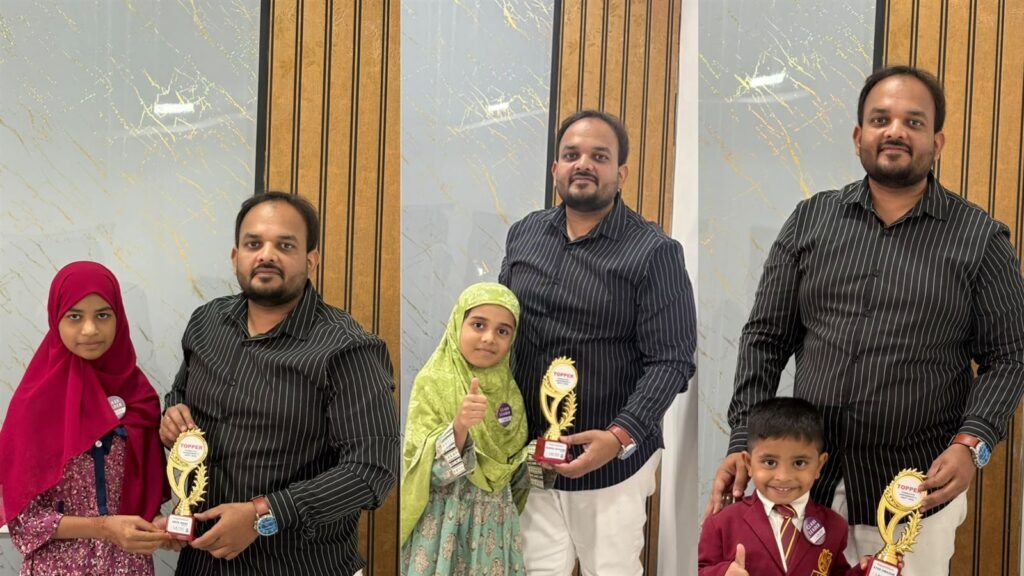
A signature in the register, a warm conversation with a teacher, a gift for a hard-working student and a proud little thumbs-up with a trophy. 🏆 That was PTM 2 at LAKSH International School, Razvi Chaman: a day when parents and teachers sat down together with one shared goal, helping every child do their best.
Table of Contents
PTM 2 at LAKSH Razvi Chaman: An Overview
Our Razvi Chaman campus held its second PTM of the academic year on 19 September 2026. Parents signed in at the PTM attendance register, met their child’s class and subject teachers, looked through notebooks and assessment papers, and talked about how their child is growing, both in learning and as a person.
This PTM had three clear aims:
- 📊 Review progress: share how each child is doing in every subject, with real examples from their work.
- 🎯 Plan next steps: agree on a few simple, practical goals for the rest of the term.
- 🎉 Recognise effort: celebrate students who have worked hard, with trophies and gifts presented by our management.
Every PTM at LAKSH is built on our Three-Cornered Approach: parents, teachers and students working together as partners. When all three corners are strong, children feel supported wherever they are.
6 Moments That Made This PTM Special
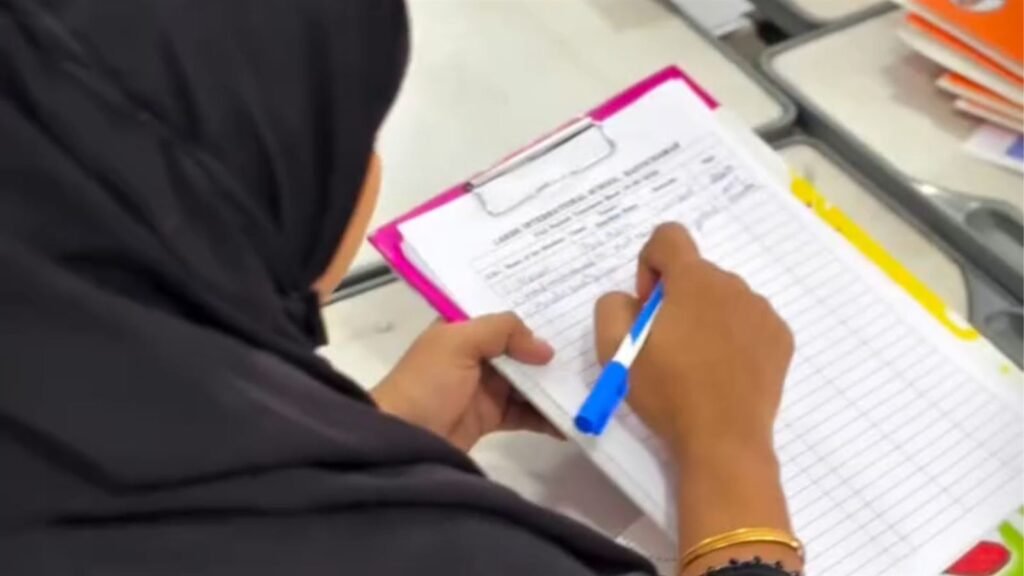
1. Every Parent Signed In
Parents began their visit by signing the PTM attendance register. It may seem like a small step, but it helps us make sure that every family is met, every question is noted, and no child is missed. It also tells us which families we need to reach out to if they could not attend.
2. Real Conversations with Teachers
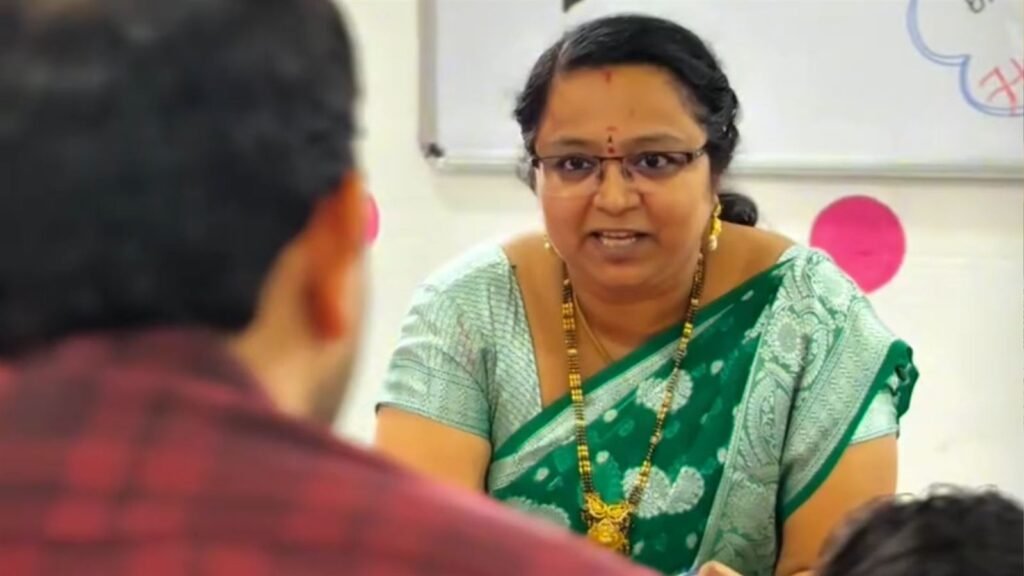
The heart of the PTM was the one-on-one conversation. Teachers explained how each child is doing in class, shared examples from notebooks and tests, and listened carefully to what parents see at home. The best conversations were honest, specific and full of practical ideas.
3. Gifts for Hard-Working Students
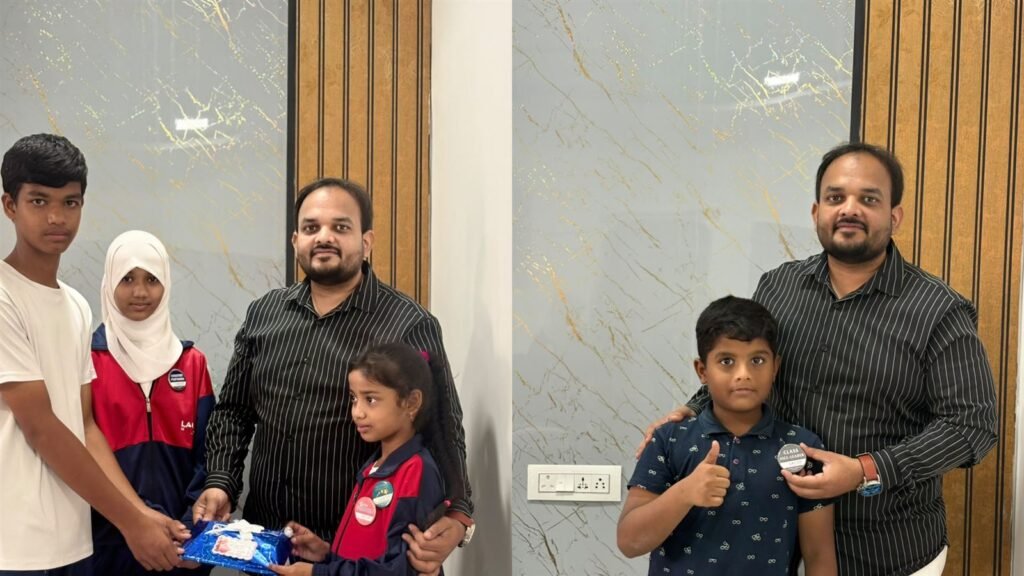
Our management personally presented gifts to students who have shown excellent effort and progress. Seeing their efforts noticed, in front of their parents, meant a great deal to the children. Students were also presented with Class Leader and Class Vice-Leader badges, recognising responsibility and leadership in the classroom.
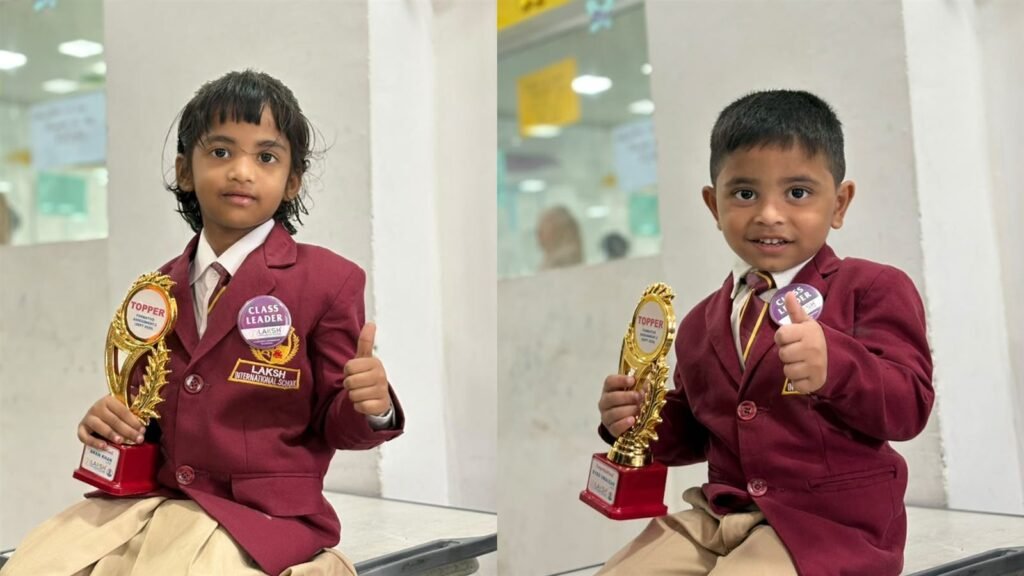
4. Trophies for Our Youngest Stars
Even our youngest learners had reasons to celebrate. Little achievers proudly received trophies, and their thumbs-up and big smiles were among the happiest moments of the day. You will find every achiever’s name in the Honour Roll below.
5. Students’ Work Speaks for Itself
Notebooks, project work and classroom displays gave parents a clear view of what their children are learning. For many families, seeing neat handwriting, completed projects and colourful artwork was the best progress report of all.
6. Goals Agreed Together
Every PTM conversation ended with next steps: a reading habit to build, a subject to revise, a skill to practise. When parents and teachers agree on the same small goals, children find them much easier to reach.
Honour Roll: PTM 2 Achievers at LAKSH Razvi Chaman
This PTM also celebrated the students who have shone this term. Congratulations to every child named below, and to the parents and teachers who stand behind them! 🎉
Student of the Month: August 2026
| Class | Student of the Month |
|---|---|
| Nursery | Madiha Fatima |
| PP1 | Anam Khan |
| PP2 (Lumina) | Afiya Firdouse |
| PP2 (Nexora) | Musfira Fatiha |
| Grade 1 | Samairah Sameer |
| Grade 2 | Mahum Maryam Fathima |
| Grade 3 | Izma Sabahath |
| Grade 4 | Sumaira Anam |
| Grade 5 | Mariya Tamreen |
| Grade 6 | Arfa Naaz |
| Grade 7 | Hania Maryam |
| Grade 8 | Sumayya Siddiqua |
| Grade 9 | Mohammad Rehan |
| Grade 10 | Hafsa Naaz |
FA-2 Toppers: Nursery to Grade 2
FA-2 is the second Formative Assessment of the year, based on class tests, activities and assignments. These young learners topped their classes:
| Class | FA-2 Toppers |
|---|---|
| Nursery | Syed Hammadullah, Md. Saad Ahmed, Amina Anam, Zaira Mehnaz |
| PP1 | Anam Khan, Syed Umaizar, Naisha Fathima, Alayna Fathima, Aayat Mirza, Omar Ahmed Khan |
| PP2 (Lumina) | Mohammed Shahan, Salwa Kaunain, Areeba Zainab, Ruhaan Arshad |
| PP2 (Nexora) | Mohammed Nusair Ahmed Siddiqui |
| Grade 1 | Manha Fathima |
| Grade 2 (Lumina) | Musfira Anam |
| Grade 2 (Nexora) | Ayesha Azeem |
FA-2 Toppers: Grades 3 to 10
| Class | FA-2 Toppers |
|---|---|
| Grade 3 | Ansha Fathima |
| Grade 4 | Umera Fathima |
| Grade 5 | Zikra Fazilath |
| Grade 6 | Almira Nahiya, Arfa Naaz |
| Grade 7 | Hania Maryam |
| Grade 8 | Faiza Afsheen |
| Grade 9 | Zainab |
| Grade 10 | Haniya Mehvish |
Weekend Test 8 Toppers: PP1 to Grade 10
Steady effort every week matters as much as big exams. These students, from PP1 to Grade 10, topped our eighth weekend test:
| Class | Weekend Test 8 Toppers |
|---|---|
| PP1 | Zainab Mukkaram, Fouzan Aqueel |
| PP2 (Lumina) | Samiha Sameer, Arhan Khan, Ayath, Arham, Amayra Khan |
| PP2 (Nexora) | Irha Unnisa, Musfira Fatiha, Halima Fathima, Rokhiya Fathima, Liza Fathima |
| Grade 1 | Manha Fathima, Manha Iram, Mohammed Faizuddin, Samairah Sameer |
| Grade 2 (Lumina) | Mahum Maryam Fathima, Musfira Anam |
| Grade 2 (Nexora) | Aleena Anam |
| Grade 3 | Izma Sabahath |
| Grade 4 | Sumaira Anam |
| Grade 5 | Mariya Tamreen |
| Grade 6 | Mariyam Ameena |
| Grade 7 | Hania Maryam |
| Grade 8 | Ayan Afzal |
| Grade 9 | Shoaib Sami, Jameel, Zainab |
| Grade 10 | Hafsa Naaz |
🌟 Star Achiever: Hania Maryam (Grade 7)
Hania Maryam appears on all three lists: Student of the Month, FA-2 Topper and Weekend Test 8 Topper. Excelling in assessments, weekly tests and everyday conduct in the same term shows remarkable consistency. Congratulations, Hania! 👏
Double achievers who appear on two lists: Anam Khan (PP1), Musfira Fatiha (PP2), Samairah Sameer (Grade 1), Manha Fathima (Grade 1), Mahum Maryam Fathima (Grade 2), Musfira Anam (Grade 2), Izma Sabahath (Grade 3), Sumaira Anam (Grade 4), Mariya Tamreen (Grade 5), Arfa Naaz (Grade 6), Zainab (Grade 9) and Hafsa Naaz (Grade 10). Well done, all of you!
To every child who is not on these lists yet: the next PTM is another chance to shine. Keep learning, keep trying and keep enjoying school. Every teacher at LAKSH is cheering for you. 💪
Why Celebrating Effort Matters
The gifts and trophies at this PTM were not only for top marks. They were for effort, progress and attitude. That is a deliberate choice.
When children are praised only for results, some start to believe they are either “clever” or “not clever”. When they are praised for effort, they learn something far more useful: that hard work leads to improvement. Children who believe they can improve are more willing to try difficult things, ask for help and keep going after a mistake.
That is why every PTM at LAKSH makes space to recognise children who have worked hard, helped others or improved steadily, alongside those who topped their class. Every child deserves to hear, at least once in a while, “We noticed. Well done.”
What Teachers Look At When Reviewing Progress
Many parents wonder what “progress” actually means at a PTM. At LAKSH, teachers look at the whole child, not just the marks:
| Area | What teachers observe |
|---|---|
| Academics | Understanding of concepts, test and assessment performance, and improvement over time |
| Reading and writing | Reading fluency, comprehension, vocabulary, handwriting and written expression |
| Class participation | Asking questions, answering, taking part in discussions and group work |
| Homework and organisation | Completing work on time, neat notebooks and bringing the right materials |
| Behaviour and values | Respect, kindness, honesty, discipline and following classroom routines |
| Social skills | Getting along with classmates, sharing, teamwork and handling disagreements |
| Confidence | Speaking up, trying new things and bouncing back from mistakes |
This is why a PTM is so valuable. Marks tell you part of the story. A conversation with the teacher tells you the rest.
What to Focus On at Every Age
What parents should ask about at a PTM changes as children grow. Here is a simple guide:
- 🧸 PP1 and PP2: focus on settling in, speaking confidently, following simple instructions, recognising letters and numbers, fine motor skills like holding a pencil, and making friends.
- ✏️ Grades 1 and 2: focus on reading fluently, neat handwriting, basic addition and subtraction, and building a daily homework habit.
- 📘 Grades 3 to 5: focus on reading comprehension, multiplication tables, written expression, organising school bags and notebooks, and taking part in activities and competitions.
- 🔬 Grades 6 to 8: focus on understanding concepts rather than memorising, managing time, independent study, and a strong foundation in maths and science.
- 🎓 Grades 9 and 10: focus on exam preparation, revision planning, stress management and early thinking about future streams and careers.
At every age, one thing stays the same: children do best when home and school give them the same message.
Understanding Your Child’s Assessments
Schools use two main kinds of assessment, and knowing the difference makes every PTM more useful.
Formative assessments happen during the term. They include class tests, worksheets, projects, oral questions and activities. Their purpose is to check understanding while learning is still happening, so gaps can be fixed early.
Summative assessments happen at the end of a term. They measure what a child has learned over a longer period.
At a PTM, formative results are often the most useful to discuss, because there is still time to act on them. If a formative test shows a weak area, a few weeks of focused practice can make a big difference before the term exam.
Tip: ask the teacher, “Which topics from the recent assessments should we revise at home?” It turns results into a clear action plan.
5 Common PTM Concerns and What You Can Do
Parents often come to a PTM with the same few worries. Here are practical ideas for each one.
1. “My child is very quiet in class.”
Shy children often understand more than they show. Encourage them to tell you about their day at dinner, praise them when they share an idea, and ask the teacher to give them small speaking roles in class. Confidence grows one step at a time.
2. “My child’s marks have dropped.”
Look for the reason before reacting. Is it one subject or all subjects? Is it a new topic, a health issue, a change in routine or too much screen time? Ask the teacher at the PTM which specific topics caused the drop, and revise those first.
3. “My child’s handwriting is untidy.”
Five to ten minutes of daily practice works better than long sessions once a week. Check pencil grip and sitting posture, use lined or four-line notebooks, and praise improvement rather than perfection.
4. “My child does not like reading.”
Let children choose books on topics they love, whether that is animals, cricket, space or comics. Read together at bedtime, visit a library, and let them see you reading too. Interest comes before habit.
5. “My child spends too much time on screens.”
Set clear, simple rules together, such as no screens during meals or an hour before bed. Replace screen time with something enjoyable, like outdoor play, board games or a family walk, rather than just taking it away.
If a concern continues, do not wait for the next PTM. Speak to the class teacher. We would always rather hear early.
How to Handle Difficult Feedback at a PTM
Not every PTM conversation is easy. Sometimes a teacher shares a concern you were not expecting, about marks, behaviour or friendships. Here is how to turn a difficult moment into a useful one:
- 🧘 Pause before you respond. It is natural to feel defensive. Take a breath and listen to the full picture first.
- 🔎 Ask for specifics. “Can you tell me when this happens?” or “Can you show me an example?” helps you understand the real issue.
- 🤝 Share what you see at home. Your view helps the teacher understand your child better, and together you may find the cause.
- 🎯 Agree on one small step. Leave the PTM with one clear action for home and one for school, not a long list of problems.
- 📅 Set a check-in date. Agree to speak again in two to three weeks to see what has changed.
Remember, when a teacher raises a concern, it means they are paying attention to your child. Early feedback at a PTM is a gift, because small problems are always easier to fix than big ones.
How to Talk to Your Child After a PTM
The first conversation after a PTM shapes how your child feels about school for weeks. A few words can motivate them, or discourage them. Here is a simple guide:
| Instead of saying… | Try saying… |
|---|---|
| “Your teacher complained about you.” | “Your teacher told me what you are good at, and one thing we can work on together.” |
| “Why can’t you be like your friend?” | “You have improved in this subject. Let’s aim a little higher next time.” |
| “You got low marks again.” | “This topic seems tricky. Let’s practise it together this week.” |
| “If you don’t improve, no phone.” | “Let’s make a plan. What would help you study better?” |
| “Only toppers matter.” | “I am proud of how hard you are trying.” |
Start with the positives, keep criticism specific, and always end with a plan and a hug. Children remember how the conversation after a PTM made them feel long after they forget the marks.
A 30-Day Plan After the PTM
The weeks after a PTM matter more than the meeting itself. Here is a simple plan any family can follow:
Week 1: Talk and set goals 🗣️
Share the good news from the PTM with your child first. Then choose one or two goals together, written in simple words and stuck on the fridge or study table.
Week 2: Build the routine ⏰
Fix a daily study time and a quiet study corner. Add 15 to 20 minutes of reading every day. Keep it short, regular and calm.
Week 3: Check and encourage 👏
Look through notebooks together. Notice effort and improvement, and say so out loud. Small wins keep children motivated.
Week 4: Review with the teacher 📞
Send a short message or have a quick word with the teacher about how the goals are going. Adjust the plan if needed, so you arrive at the next PTM already on track.
Your One-Page PTM Checklist
Save or screenshot this checklist before your next PTM:
- ☐ Look through your child’s notebooks and recent test papers.
- ☐ Ask your child which subject they enjoy most and which feels hardest.
- ☐ Write down your top three questions for the teacher.
- ☐ Note any changes at home: sleep, appetite, mood, friendships or screen time.
- ☐ Arrive on time and sign the PTM register.
- ☐ Listen first, then ask your questions.
- ☐ Ask for one specific example of a strength and one area to improve.
- ☐ Agree on one or two goals for home and for school.
- ☐ Save the teacher’s preferred way of being contacted.
- ☐ Share the good news with your child the same day.
A prepared parent gets far more out of a short PTM conversation, and the child benefits most of all. Need ideas for what to ask? See our list of 10 questions to ask at a parent teacher meeting, from PTM 2 at our Vijaynagar Colony campus.
Can’t Attend the PTM? Options for Working Parents
We know many parents work long hours, travel or care for younger children. Missing a PTM does not mean missing out on your child’s progress:
- 📞 Tell the class teacher in advance. A quick message before the PTM lets us plan another way to connect.
- 🕐 Ask for another time. Teachers can often arrange a short meeting on another day or a phone call at a convenient time.
- 👨👩👧 Send another family member. A grandparent or relative can attend, take notes and share the teacher’s feedback with you.
- 📓 Check notebooks and the school diary. Teachers’ remarks in notebooks are a mini progress report every week.
The most important thing is to stay connected. Whether you meet at the PTM or on another day, your involvement makes a real difference to your child.
What Our Teachers Want Every Parent to Know
Our teachers meet hundreds of families at every PTM. These are the messages they would most like every parent to hear:
- 💛 Every child learns at their own pace. Comparison with siblings or classmates rarely helps. Progress is what matters.
- 🛌 Sleep and breakfast affect learning. A rested, well-fed child concentrates far better in class.
- 📚 Daily reading is the single best habit. It helps in every subject, not just English.
- 🗣️ Talk to your child about school every day. Children who share their day with their parents feel more secure and more confident.
- 🤝 We are on the same team. Teachers and parents both want the same thing: a happy, confident, successful child.
More from Our PTM 2 Series
Every LAKSH campus held its PTM 2 this month, and each article focuses on a different part of the parent’s journey:
- 📋 Before the PTM: 10 questions to ask at a parent teacher meeting, from our Vijaynagar Colony campus.
- 🗓️ After the PTM: a 30-day plan, a checklist and what to say to your child, in this article from our Razvi Chaman campus.
- 📊 Understanding the progress report: how to read your child’s progress report and decode teacher remarks, from our Kisannagar campus.
Why Parents Choose LAKSH Razvi Chaman
For 16 years, families across Karimnagar have trusted LAKSH International Schools with their children’s education. Here is why parents in and around Razvi Chaman choose our campus:
- 🏆 An award-winning school: Best School of the Year 2026 for Experiential Learning, 1st in Telangana and 4th in India for Technology Integration by Education World, and among the Top 500 Schools of India.
- 🤖 Our own AI lab: Razvi Chaman students now learn AI, coding and digital skills in the new AI lab at LAKSH Razvi Chaman.
- 🤝 Parents as partners: regular PTMs and our Three-Cornered Approach keep families involved all year.
- 🧠 The 360° Learning Model: our 360° Learning Model develops every child intellectually, emotionally, socially, digitally and practically.
- 📚 A strong academic foundation: preparation for Olympiads and competitive exams such as IIT-JEE and NEET.
- 🏅 Recognition for effort: trophies, gifts and awards that celebrate hard work, not just top marks.
- 📍 A school close to home: on Road No. 1, Razvi Chaman, Karimnagar.
Choosing a school is about choosing a partner for your child’s future. At LAKSH, that partnership starts at every PTM.
Frequently Asked Questions
What is a PTM?
A PTM (Parent Teacher Meeting) is a scheduled meeting where parents and teachers discuss a child’s progress, strengths and areas for improvement, and agree on next steps together.
When was PTM 2 held at LAKSH Razvi Chaman?
PTM 2 was held on 19 September 2026 at LAKSH International School, Razvi Chaman, Karimnagar.
Were students awarded at PTM 2 in Razvi Chaman?
Yes. The PTM celebrated Students of the Month for August 2026, FA-2 Toppers from Nursery to Grade 10, and Weekend Test 8 Toppers from PP1 to Grade 10, with trophies and gifts presented by our management.
Which student appeared on all three honour lists?
Hania Maryam of Grade 7 was named Student of the Month, FA-2 Topper and Weekend Test 8 Topper.
How long does a PTM conversation usually take?
Most PTM conversations take around 5 to 10 minutes per family. Coming with two or three questions ready helps you make the most of the time.
Should I bring my child to the PTM?
Yes, where possible. When children hear their parents and teachers agree on the same goals, they take those goals more seriously.
What if I have a concern before the next PTM?
Please contact the class teacher or the Razvi Chaman front office on 97503 71234. You do not need to wait for the next PTM to raise a concern.
What should I do if the teacher’s feedback at the PTM is negative?
Listen calmly, ask for specific examples, share what you see at home and agree on one small step for home and one for school. Then check in with the teacher again after two or three weeks.
Can working parents meet the teacher at another time if they miss the PTM?
Yes. Inform the class teacher in advance and they will try to arrange a short meeting on another day or a phone call at a convenient time.
Where is LAKSH International School, Razvi Chaman?
10-39/A4, Road No. 1, Razvi Chaman, Karimnagar, Telangana.
Admissions Open at LAKSH Razvi Chaman: How to Apply
Looking for a school that treats every PTM as a real partnership? Admissions are open at LAKSH International School, Razvi Chaman. 🌟
Apply in 4 easy steps:
- 📞 Enquire: call 97503 71234 or fill in our online enquiry form.
- 🏫 Visit: tour the Razvi Chaman campus and see our new AI lab.
- 🤝 Meet us: talk to our academic team about your child’s needs and goals.
- ✅ Enrol: complete the admission formalities and join the LAKSH family.
Seats in each class are limited, so we encourage parents to visit early.
📍 LAKSH International School, Razvi Chaman
10-39/A4, Road No. 1, Razvi Chaman, Karimnagar
📞 Call: 97503 71234
📧 Email: lakshrazvichaman@gmail.com
Laksh International Schools — Learning Today. Leading Tomorrow.