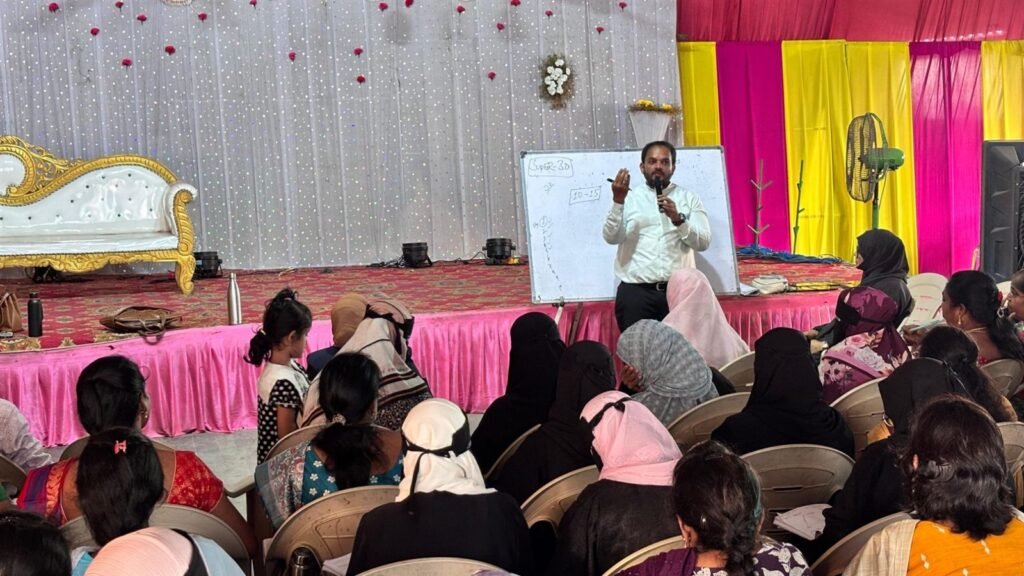
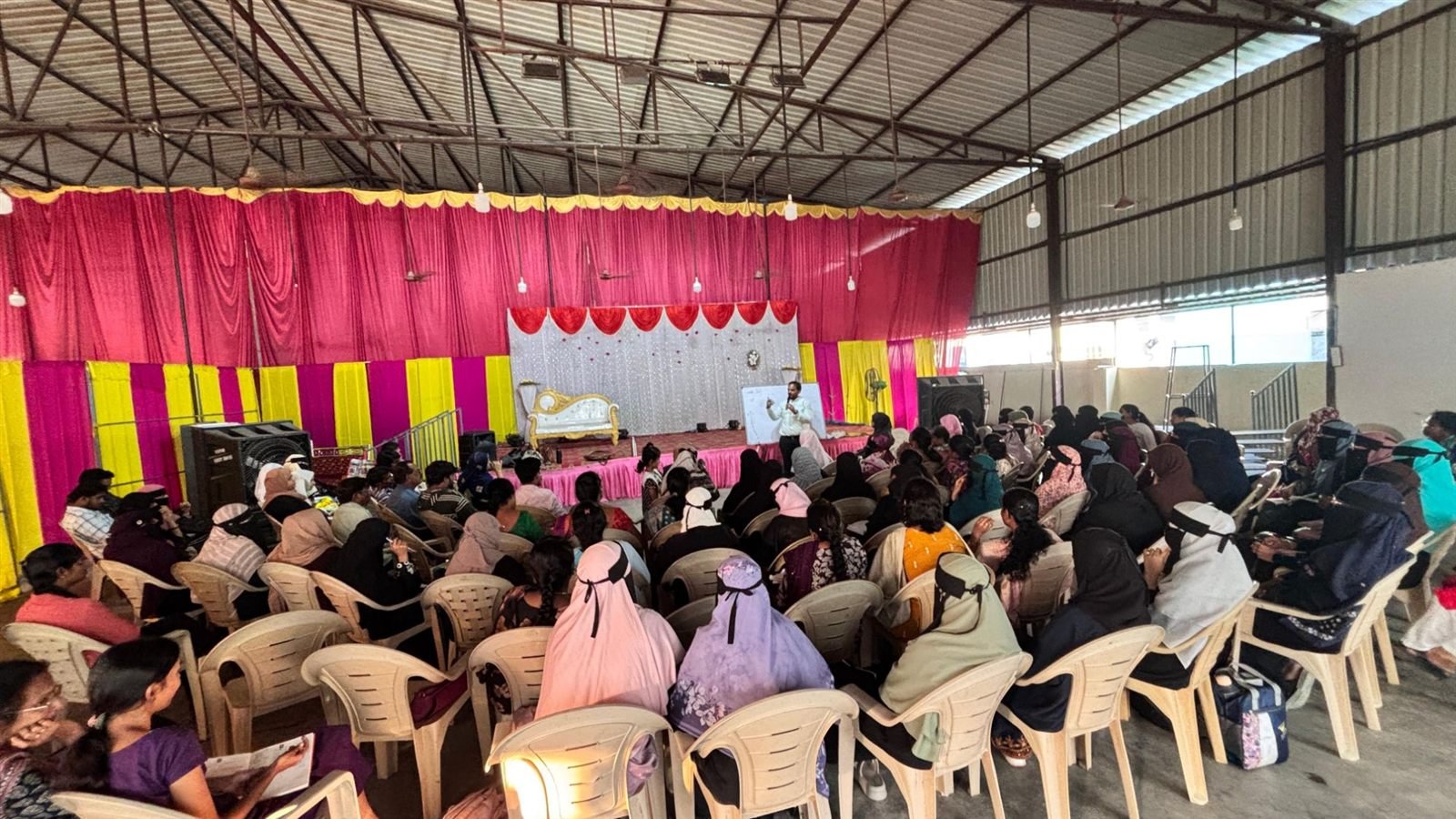
Every school in Karimnagar will tell you about its building, its buses and its results. Very few will tell you what happens to their teachers after they are hired. 📚 On 10 October 2026, teachers from four LAKSH campuses — Kisannagar, Razvi Chaman, Vijaynagar Colony and Peddapalli — spent the day at Royal Garden, Karimnagar, in a full-day teacher training session led by our Chairman, Dr. Mohammad Mustaq Ali.
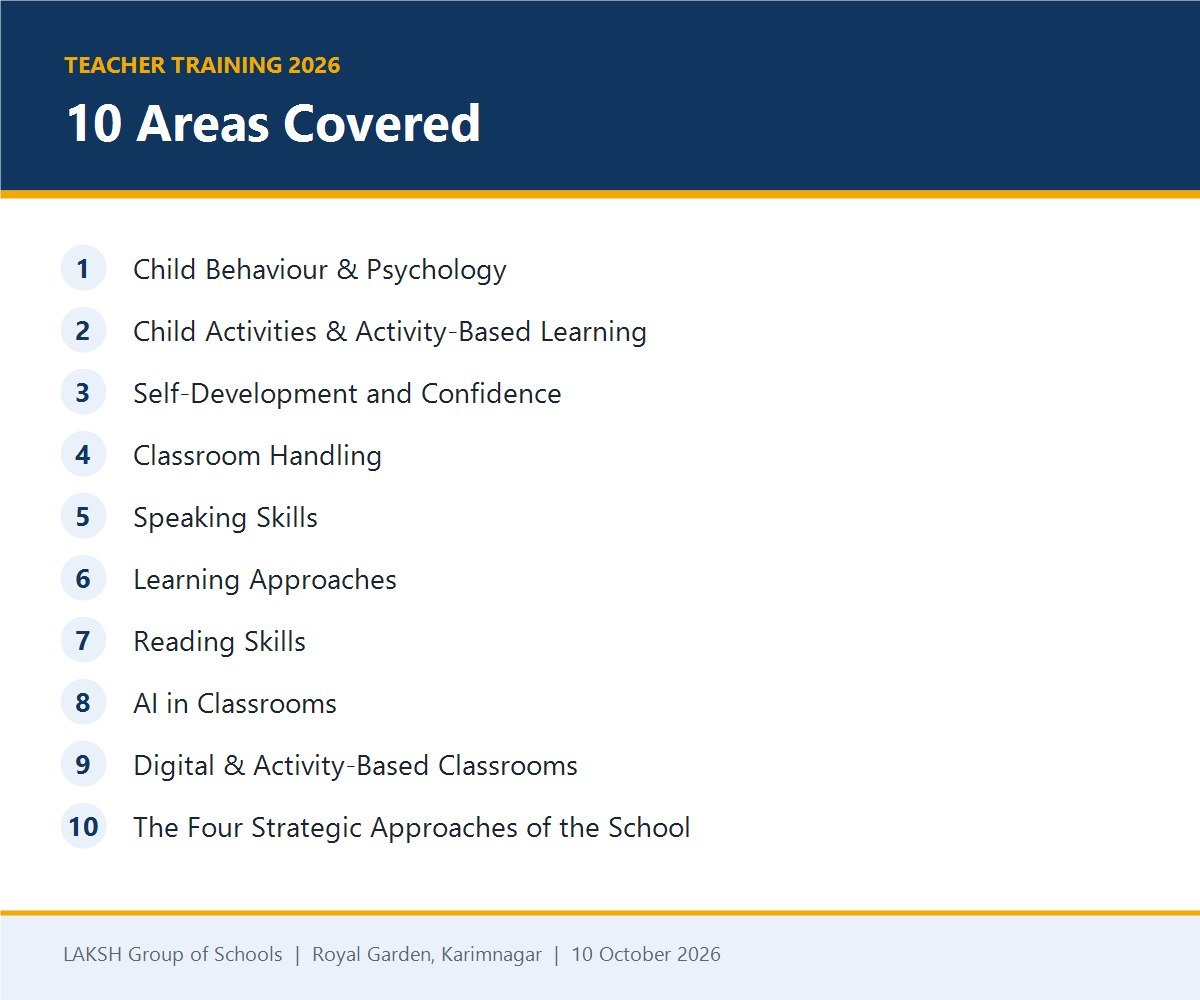
Ten areas were covered, from child psychology to artificial intelligence in the classroom. This article explains each one, and more importantly, what each one changes in your child’s classroom next week.
Table of Contents
Why Teacher Training Matters More Than Any Facility
A school can buy a smart board in an afternoon. It cannot buy a teacher who knows when a quiet child is bored and when that same child is struggling.
Decades of education research point in the same direction: of everything a school controls, teacher quality is the single largest factor in how much a child learns. Not class size. Not the building. Not the number of screens. The person standing in front of the class.
That is why teacher training is not an annual formality at LAKSH. It is the mechanism by which anything we decide actually reaches a child. A new curriculum, a new lab, a new idea about reading — none of it exists until a teacher can do it on a Monday morning with thirty children in front of them.
India’s National Education Policy 2020 makes the same argument at national scale, mandating continuous professional development for every teacher. Our view is simpler: you cannot ask teachers to grow children if nobody is growing the teachers.
The Session at a Glance
| Led by | Dr. Mohammad Mustaq Ali, Chairman, LAKSH Group of Schools |
| Venue | Royal Garden, Karimnagar |
| Date | 10 October 2026 |
| Attending | Teaching staff from Kisannagar, Razvi Chaman, Vijaynagar Colony and Peddapalli |
| Areas covered | 10, from child psychology to AI in classrooms |
Bringing every campus into one room matters more than it sounds. It means a Grade 3 child in Peddapalli and a Grade 3 child in Vijaynagar Colony are taught by people working from the same playbook.
Here are the ten areas the session covered, at a glance:
Part 1: Understanding the Child
Half of this teacher training session was not about teaching at all. It was about children.
Child Behaviour and Psychology
Most classroom problems are not discipline problems. They are communication problems wearing a disguise.
A child who will not sit still may be anxious, may be bored, may not have eaten, may not be able to see the board. A child who refuses to answer may not be defiant — they may simply be terrified of being wrong in front of thirty people. The teacher who can tell these apart solves the problem. The teacher who cannot just punishes the symptom.
This part of our teacher training focused on reading behaviour as information:
- 🔍 Look for the trigger, not just the behaviour. What happened in the ten minutes before?
- 🔁 Notice patterns. Every day at the same time? Only in one subject? Only after lunch?
- 🧠 Separate the child from the conduct. “That was unkind” is correctable. “You are unkind” is a label a child will carry.
- 👂 Ask before assuming. The most powerful sentence in a classroom is often “Tell me what happened.”
Self-Development and Confidence
Confidence in children is not built by praise. It is built by evidence — a child needs to watch themselves succeed at something that was genuinely hard.
Our teachers worked on how to create those moments deliberately: giving a hesitant child a small responsibility, letting a child who struggles in maths lead in art, making sure that every child is good at something visible in front of their peers at least once a term.
This connects directly to the Express and Lead stages of our 360° Learning Model, where children present their own work and then help others.
Part 2: Teacher Training for Running a Classroom
Classroom Handling
Thirty children, forty minutes, one adult. Classroom handling is a craft, it is mostly invisible when done well, and it is the part of teacher training that pays back fastest.
The session covered the practical mechanics: how lessons are started so that attention is captured in the first ninety seconds, how transitions between activities are managed without losing the room, how instructions are given once and clearly rather than five times and loudly, and how a teacher’s own voice and position in the room do most of the work that shouting cannot.
A well-handled classroom is not a silent one. It is one where the noise is the right kind.
Activity-Based Learning
Children remember what they do far longer than what they are told. This portion of our teacher training dealt with converting ordinary lessons into activities:
- 🧪 Fractions taught by cutting and sharing, not only by writing
- 🌱 The water cycle taught with a tray, a glass and sunlight
- 🎭 History taught by arguing as the people involved
- 🧮 Measurement taught by measuring the actual classroom
The test applied throughout the session was simple: if a child described this lesson at the dinner table tonight, would there be anything to describe?
Digital and Activity-Based Classrooms
Digital screens are only as good as the question asked in front of them. Our teachers worked on using interactive displays as a thinking tool rather than a television — pausing a video to predict what happens next, projecting a problem with no given method, showing two conflicting sources and asking which to believe.
The goal set in this teacher training was out-of-the-box thinking: lessons where there is more than one correct route to the answer, and children have to choose one and defend it.
Part 3: The Three Skills That Decide Everything Else
Speaking Skills
No part of teacher training changes a child’s future more quietly than this one. A child who cannot express an idea will be assumed not to have one. That is unfair, and it follows them into interviews, viva exams and working life.
Teachers worked on building speaking into normal lessons rather than reserving it for annual day — structured turns where every child speaks, not only the confident ones; answering in full sentences; explaining why, not only what; and presenting work to the class as routine rather than ordeal.
This is also how teachers model it themselves. Children copy the vocabulary of the adult in the room.
Reading Skills
Of all the teacher training areas covered, this one has the widest reach. Reading is the subject that silently decides every other subject. A child who reads poorly in Grade 4 is not only weak in English — they are weak in the word problems in maths and the chapter questions in science.
The teacher training distinguished between two things that are often confused:
- Decoding — being able to say the words on the page.
- Comprehension — knowing what those words meant.
A child can be fluent at the first and lost at the second, and it is easy to miss. Teachers covered checking comprehension by asking children to retell rather than to repeat, building reading habits that survive outside the classroom, and spotting the child who has learned to hide.
Learning Approaches
Teacher training is wasted if every lesson is delivered one way. Not every child arrives the same way. Some need to see it, some need to hear it, some need to hold it, and most need more than one. This part of the session focused on teaching the same concept more than one way in the same lesson — so that a child who missed it the first time is caught the second, rather than waiting until a test reveals the gap.
It also covered pace: knowing when to move on, when to stop and reteach, and how to keep the fastest children extended rather than idle.
Part 4: AI in Classrooms
Artificial intelligence has already arrived in children’s lives, whether or not schools are ready. Our teacher training treated it as a tool to be understood rather than a threat to be banned.
Two halves to this session. First, AI for teachers: generating practice questions at different difficulty levels, producing worksheets quickly, finding alternative explanations for a concept that did not land, and reducing the administrative load that eats into lesson preparation.
Second, and far more important, AI for students: teaching children that an AI answer is a starting point and not a verdict. Our students are taught to check what a model tells them against their textbook and trusted sources — the five-step Ask, Search, Check, Cite, Create method already running in our AI lab at the Kisannagar campus and across our AI learning programme.
This focus is not new for us. LAKSH was ranked 1st in Telangana and 4th in India for Technology Integration in the Education World Grand Jury Rankings. Teacher training is how that ranking stays true rather than becoming a plaque on a wall. 🏆
Part 5: The Four Strategic Approaches of LAKSH
The day closed with the framework that holds the other nine teacher training areas together. Every school has methods. Fewer have a stated position on what a classroom is for. These four approaches are what every LAKSH teacher, on every campus, is expected to implement.
1. Teach for Understanding, Not for Recall
A child who can repeat a definition has not necessarily learned anything. Our 360° Learning Model — Teach → Visualize → Experience → Express → Lead — exists to make the difference visible. A concept is not considered taught until a child can do something with it and then explain it to someone else. Teacher training is where teachers practise running that full cycle instead of stopping at the first stage, which is where most teaching stops.
2. Every Child Must Lead Something
Not every child will top the class. Every child can lead something — a group activity, a reading circle, a presentation, a younger student. This is deliberate, not sentimental: leadership is the fastest route to confidence, and confidence is what decides whether a capable child ever speaks up. Teachers are expected to know, for each child in their register, what that child leads.
3. Technology With Judgement
We put AI and digital tools in front of children early, and we teach them to distrust the output. Those two things are not in tension — they are the same skill. A student who can use an AI tool but cannot check it is not prepared for anything. This approach is why our AI labs spend as much time on verification as on creation, and it is the thinking behind our ranking of 1st in Telangana for Technology Integration.
4. Parents as Partners, Not Spectators
A school that only contacts parents when something is wrong has already lost most of the value of the relationship. Structured parent-teacher meetings, detailed progress reports, and articles like this one exist so that parents know what is being taught and why — and can continue it at home. The article you are reading is itself an example of the fourth approach in action.
What This Teacher Training Changes in Your Child’s Classroom
Dear Parents — teacher training is easy to announce and hard to see. Here is what you should actually notice over the coming weeks:
- ✅ Fewer “he was naughty” notes, more specific observations. Behaviour described as information, not verdict.
- ✅ More “we did” than “we wrote”. Ask what your child made today, not only what they copied.
- ✅ Your child speaking in full sentences when explaining schoolwork at home.
- ✅ Reading checked by retelling. “Tell me what happened in that chapter” rather than “read it again.”
- ✅ A concept explained two ways when your child says they did not understand.
- ✅ AI discussed openly, with your child able to say why an answer needed checking.
Try this at home this week: ask your child “what did you argue about in class today?” If the answer is “nothing”, that is useful information too — tell us at the next parent-teacher meeting.
7 Questions Every Parent Should Ask Any School About Teacher Training
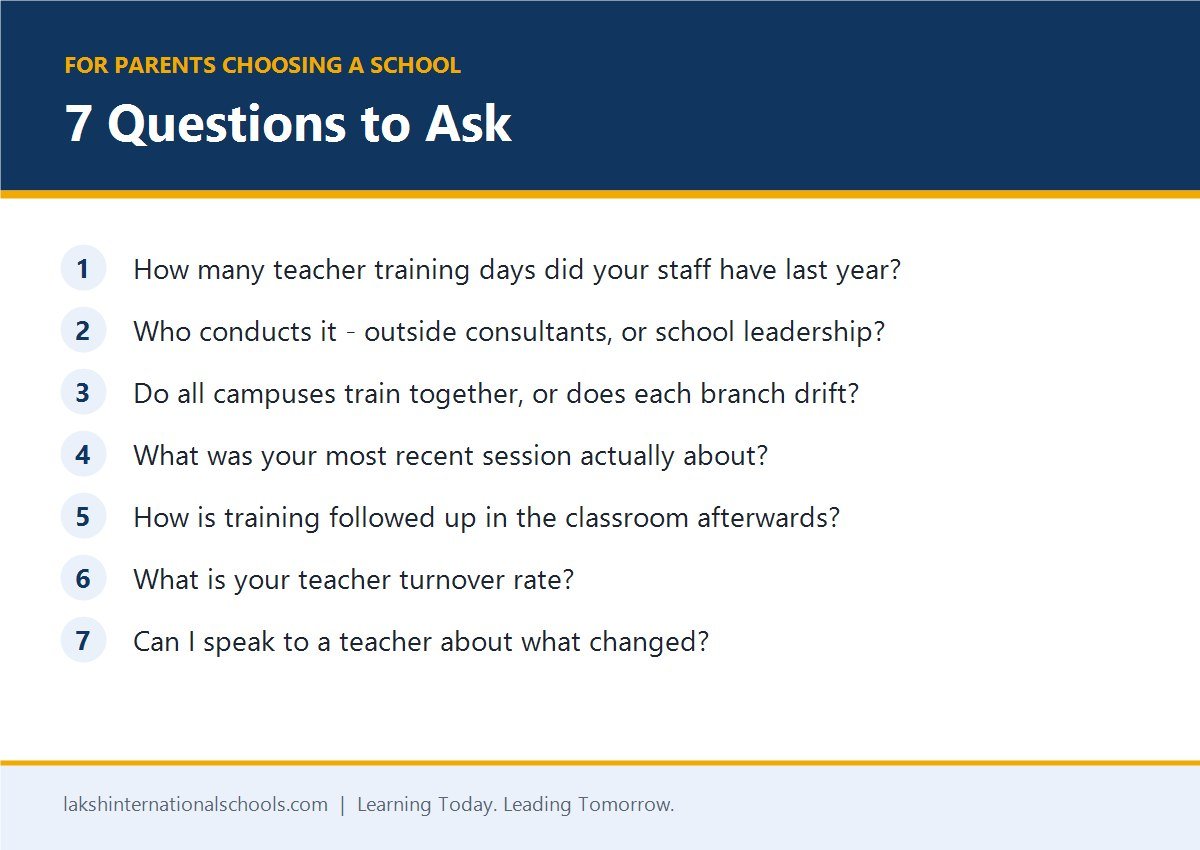
This is worth knowing whether you choose LAKSH or not. Most schools claim staff development. These seven questions separate the ones who do it from the ones who say it:
- How many teacher training days did your staff have last year? A real answer has a number in it.
- Who conducts it? External consultants once a year, or school leadership continuously?
- Do all campuses train together? If not, standards will drift between branches.
- What was the most recent session on? Vagueness here is the tell.
- How is it followed up? Training without classroom observation afterwards changes nothing.
- What is the teacher turnover rate? Schools that invest in teachers keep them.
- Can I speak to a teacher about it? The answer to this question is itself the answer.
Why Parents Choose LAKSH International Schools
Teachers who are developed, not just employed. Whole-day teacher training across four campuses at once, led by the Chairman himself rather than outsourced and forgotten.
One standard across every branch. Kisannagar, Razvi Chaman, Vijaynagar Colony and Peddapalli trained together on the same day, so your child gets the same quality wherever you live.
Nationally recognised. Ranked 1st in Telangana and 4th in India for Technology Integration, and among the Top 500 Schools of India. 🏆
Competitions are part of the plan. Our students regularly win beyond the school gates — most recently at the Eenadu Pratibha painting competition and in karate championships.
Technology with judgement. AI labs where children learn to use modern tools and to question them.
Parents are genuinely informed. Structured parent-teacher meetings with real conversations about your child, not a two-minute queue.
Frequently Asked Questions
What is teacher training and why does a school need it?
Teacher training is structured professional development for teaching staff, covering classroom practice, child psychology, subject skills and new tools. Schools need it because teacher quality is the biggest in-school factor affecting how much a child learns, and because methods and technology change faster than any initial qualification can cover.
What topics were covered in the LAKSH teacher training session?
Ten areas: child behaviour and psychology, child activities, self-development, classroom handling, speaking skills, learning approaches, reading skills, AI in classrooms, digital and activity-based classrooms, and the four strategic approaches of the school.
Who conducted the teacher training?
Dr. Mohammad Mustaq Ali, Chairman of LAKSH Group of Schools, led the full-day session at Royal Garden, Karimnagar on 10 October 2026.
Which campuses attended?
Teaching staff from four campuses — Kisannagar, Razvi Chaman and Vijaynagar Colony in Karimnagar, and Peddapalli — attended together, so that teaching standards stay consistent across branches.
How often does LAKSH conduct teacher training?
Professional development runs through the academic year, combining full-day sessions like this one with ongoing in-school guidance and classroom follow-up.
How does teacher training affect my child directly?
It changes daily classroom practice: how lessons are started, how behaviour is interpreted, how reading comprehension is checked, how concepts are re-explained when a child does not understand, and how technology is used.
Does LAKSH train teachers to use AI?
Yes. Teachers were trained both to use AI for lesson preparation and to teach students to verify AI answers against textbooks and trusted sources rather than accepting them.
Where are the LAKSH campuses?
LAKSH Group of Schools has five campuses: Kisannagar, Razvi Chaman and Vijaynagar Colony in Karimnagar, Peddapalli, and Attapur in Hyderabad. Full addresses and directions are on our centre locator page.
Admissions Open at LAKSH International Schools
If you are choosing a school, look past the building and ask about the teachers. We would be glad to answer all seven questions above, in person. 🌟
📍 Five campuses: Kisannagar · Razvi Chaman · Vijaynagar Colony (Karimnagar) · Peddapalli · Attapur (Hyderabad)
📞 Call: 96181 60524 or 90008 36969
📧 Email: lakshinternationalschools@gmail.com
Admissions are open across all LAKSH campuses. Book a visit, meet the teachers, and ask them anything.
👉 Apply for admission | Send an enquiry | Find your nearest campus
Our thanks to Dr. Mohammad Mustaq Ali and to every teacher who gave a full day to getting better at a job they already do well. 👏
Laksh International Schools — Learning Today. Leading Tomorrow.